Saturday, March 24, 2012

Internet Marketing 2.0: Using Online PR strategies In The Search Engines


Internet Marketing Service


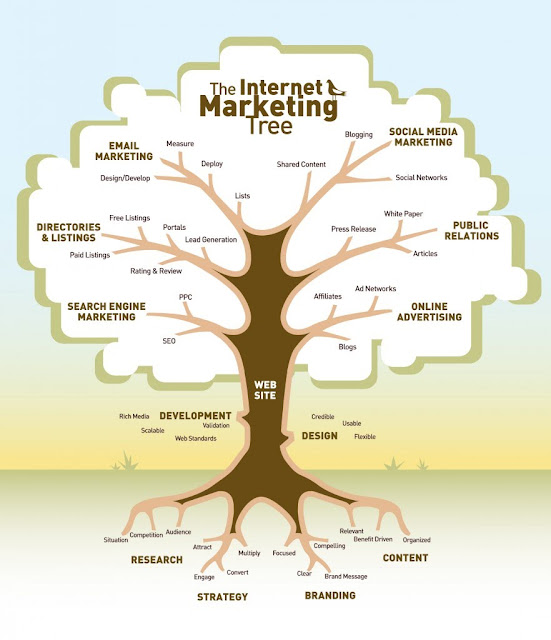
Internet Marketing is booming. According to a study by only, for more than 150 marketing professionals in the U.S., Canada and 12 European countries were surveyed, 84% believe that the focus of their marketing activities towards the Internet moves. The reason for the change is primarily the large spectrum of new media that are available as tools for Internet marketing. Thus, the increasing interest for new channels like social media (micro-blogs, social communities), rich media (video and podcasts) or mobile channels. Especially small marketing budgets offers the use of new Internet marketing tools a great opportunity: providing outstanding range and high target group relevance and manageable costs. Search engines play a crucial role in the Internet marketing. When searching for products and services Google and Co. are the first choice. It is therefore important to climb with smart Internet marketing strategies in the search engines to the top. The Online PR provides effective and above all cost effective tools to optimize the hit rate in the search engines long term and reach new customers and potential customers directly.
Search engine PR (SEO PR) for more coverage

So far, mainly SEO and SEM strategies used to optimize the visibility in the search engines. But only about a third of search engine rankings are influenced by the technical optimization of a website (= page optimization). The predominant influence on the ranking is done by actions outside the site (= off page optimization). A very effective and most importantly, sustainable way to climb into the top search engine results lists, offers search engine optimized online PR (SEO PR). To take advantage of the positive effect of SEO PR for the internet marketing, it is important to understand how the search engines.

Search Engines Work For People

People looking for information using search terms (keywords). To list relevant search results, search the Internet search engines robots to regularly for new content on specific keywords and rank the content according to certain criteria. Plays mainly the thematic content and relevance of web content a crucial role.

The Relevance Of Web Content Is Measured Mainly By Two Factors:

1) Content quality: well-written, timely articles with themenrelvanten content and keywords.
2) Link building: a vast network with other thematically relevant websites (backlinks)

Using The Tools Of Online PR Can Both Main Criteria Of The Search Engines A Positive Influence:

Keywords and links play in the Internet marketing is a very crucial role

Search engines love text. Press releases consist of current and editorially processed, and thus provide information, good food 'for Google and keywords in the title and text of the press release supporting the finding of the press releases in the search engines using relevant search terms. In particular, in the headline and teaser in the placement of keywords is important. But only what is sought, can also be found. The press release should contain important keywords that are sought by customers. Eye-catching creations from the marketing jargon should be replaced by generic terms from the everyday language of the customer.

Tips: A keyword analysis tool can help you with the word-finding and evaluation of search queries.

The publication of press releases on the Internet also supports the link-building strategy. Follow the links from press releases and contact information in news releases, links back to the company's website generates (backlinks). For a good position in the results pages of search engines so far-reaching publishing and linking of PR copy on the Internet is important.

The links are also a bridge between customer and company. Deep links to the home page or a specific landing page lead directly to the interested parties so that the point of sale and are therefore very important for Internet marketing.


Wednesday, March 21, 2012

Can you put together a celebrity fragrance deal?

Let's just say you know someone who is a celebrity, perhaps not a very big celebrity (which may be good!) but at least a celebrity in your city or region or among your social media group. How would you like to put out a celebrity fragrance using this person as your celebrity?

There are a few things you'll need that you probably understand already. First you have to be able to produce a fragrance. You can learn how to do this on just about any scale by reading "Creating Your Own Perfume With A 1700 Percent Markup!"

Then you have to be able to market this fragrance. You can get some ideas on how to do this by reading "Basic Strategies For Selling Your Own Perfume!"

But what makes this project special is that you are going to do it in the name of this local celebrity you know or know of and this means you have to negotiate a deal with her or him or their agent or manager if they have one.

As you go over the deal in your head it probably looks something like this: "You give me your name, image and fame; I'll make up a fragrance and sell it in your name and we'll divide the profits." Simple.

Alas, if you've never seen egos collide you are about to. It will be ugly and it will probably happen before your have earned a penny. While you, the enterprising marketer, are going to do all the work, pay all the expenses and take all the risk, your celebrity suddenly gets millionaire visions and sees you hogging all that money while they are getting screwed. Explosion! It is time now for serious negotiations.

I have seen these explosions. They can be very surprising to any budding entrepreneur or promoter who thinks he or she is working on the basis of friendship. You wouldn't be anything else but perfectly ethical and honest. But surprise! Dreams of great wealth have a way of twisting otherwise level headed heads. It really is time now for serious negotiations.

Negotiations. Why? What?

Vigorous arms-length negotiations before you launch your promotion can save you endless future headaches. But what do you need to negotiate? There can't be too much to it ... or can there?

Let's look at a few issues. You're going to be doing almost all the work -- but you'll be using your celebrity's name and fame. You're doing it to make money for yourself but you know, or you should know, that once things get rolling your celebrity is going to be looking for money too. So how do you work that?

At one time some fairly well known celebrities could be hired -- for a fee -- to endorse a fragrance. Of course this involved what seemed at the time to be a fairly substantial fee, and it was guaranteed, up front, regardless of whether the marketer made money or not.

Today royalty agreements are more common. You negotiate a license with the celebrity or, in reality, with their managers and lawyers.

But what is this royalty? And is that all that needs to be negotiated?

In fact, setting a royalty rate and negotiating how it will be calculated and paid is a fine art in itself. In your case look at the complications. Suppose the royalty is on sales -- but you make some sales yourself, directly to consumers, and other sales to stores which then sell to consumers -- two different types of sales so are there going to be two different royalty rates?

And what about your expenses? Can they be deducted? What about stores that fail to pay you for the bottles you gave them? Can that loss be deducted?

What about a failed promotion? Does your celebrity now get nothing or is there a guarantee? And does the celebrity get any money up front? And is that a signing bonus or an advance on royalties which later must be earned? When are the payments to your celebrity due? How can he or she check on your accounting to make sure it is honest? What happens if one of you wants to get out of the deal? What happens if somebody sues you claiming they were harmed by your fragrance? Does your celebrity get dragged into a lawsuit, even though he or she had nothing to do with making the fragrance?

Negotiating a workable understanding -- a license -- is the heart of any celebrity fragrance deal. These deals are usually negotiated by lawyers but if you, on a small scale, want to wing it with a local celebrity, at least want to be aware of the important issues. And you want your celebrity (or her boyfriend, his girlfriend, or their manager) to be aware of what you are doing and to understand the implications. And you want to get it all down in writing, even if you're only writing up a simple letter of agreement.

My thoughts on this topic and some of the points I discovered while reviewing a major celebrity's license with an un-famous marketer led me to write up a simple introduction to this topic -- "Setting Up Your Own Celebrity Fragrance Deal: Introduction to the Basics" -- which you can purchase and download at my website.

Monday, March 12, 2012

SEO Tips From The Experts

Internet Marketing Service
Geir Ellefsen of edgyseo.com asked earlier this year a number of renowned SEO experts to forecast a future in 2012. Since it will undoubtedly be interesting for you too probably, what tips Rand Fishkin , Danny Dover , Aaron Wall , or even our Marcus Tandler  in terms of future development in search engine optimization  are given, we have the contribution of ` 18 SEO Experts On How To Do SEO In 2012, 'translated into German for you. Here, first the first part, where the total of 18 experts were after their opinion, the best SEO tip asked for 2012 ...

What is your best SEO tip for 2012?

Rand Fishkin, seomoz.org : moves you away from the classic old-school SEO. If you you continue to focus only on some keyword recherche, a little usability and link building, you can watch certain to lose out to those who lose out, their activities on content marketing, viral product marketing, e-mail, social media have extended conversion optimization and branding.

The power of the combination of tactics and the benefit of overlapping marketing practices is awesome.

Dr. Peter J. Meyers, usereffect.com : consolidate consolidate consolidate. I think the great lesson of Panda update that more is not always better. More indexed pages cost Google money and dilute the actual important content. Canonized true duplicates reduced, similar content and eliminates thin content at the minimum. If you offer something that is sure to bring something truly unique to the table. If you're an affiliate, cushions your content enough to.

Will Critchlow, distilled.net : More than ever, I believe that now is the new content. We will see interactive data visualizations that generate tons of links and shares are.

Danny Dover, dannydover.com : SEO is more than just link building, write comments, and tags optimization.

SEO now include the entire site experience. Do not be focused only on traditional SEO, but spread your activities on other marketing channels (e-mail, CRO, Social, PPC). I think this year's winners will be those that come out in the field of online education high. I say that this industry will explode in 2012.

Bas van den Beld, stateofsearch.com : 1 Shareable and personalized attention that makes your content. The Internet is personal. To make things as personal as possible, Google will make Google + to the center of everything. This has the consequence that we will see a lot more personal elements, such as in the SERPS. You should be designed so your content shareable as possible. Incites people to share and distribute your content in the networks. Your content will be shown later in the personalized SERPs.

Second Optimize your snippets. Google is very particular about snippets. Optimize all your snippets, not only descriptions but also rel-author, reviews, everything.

Ann Smarty, myblogguest.com : If your focus was always on content and quality, you will change for next year too little. Perhaps you should try to experiment a little with current content and to follow that current trends. Apart from this, however, is simply business as usual!

Jeremy Schoemaker, shoemoney.com : For the year 2012, I suggest that you build Web pages that link to other people happy.

Aaron Wall, seobook.com : Google is moving its algorithm even further in favor of brands. Just as Google promotes brands, it would be cheaper in many cases, to use one of them sponsored publication opportunities than to build his own site. If you look in the SERPs across a wide selection of keywords, you will find that many of their business models to build on that to be the e How of the e How Facebook or You Tube. In addition to these low-level stories can offer its products on eBay, Amazon or Etsy.

Neil Patel, quicksprout.com : Stop it up, build links too quickly. If you grow too fast, you will see that it will later be difficult to achieve top rankings. In 2012, Slow and Steady 'win' the race. If they do not worth much, but on good links.

Justin Briggs, justinbriggs.org : I would keep an eye on the growth of entity specific search algorithms, with a focus on branding, the Agent Rank / Rank Author and signs of `real 'interests, such as specific products, places, movies, songs, etc . I think an increased fire monitoring, Rel-author, the social graph and schema are early signs of this type of ranking algorithms. Search engines are moving beyond the sides and domain-level and are increasingly better understanding of entities or objects.

Tom Critchlow distilled.net, : focused on you, the user-engagement. I think the fact that Google publicly discussed how this treatment may be preferred by a reward of brands will be marketing professionals understand the importance of the loyalty of their users so slow. Whether it is exactly this metric is or not, I think we will see a slight weakening at the end of the link-based metrics to more social and user-specific metrics.

Gianluca Fiorelli, iloveseo.net : I would strongly recommend that Rel or Rel-Author-Publisher tags to implement, hence the use of Google +.

I think in fact that the author-rank one of the most important factors for Google will be when it comes to recognize authorities, because then they will be able to identify which pages are really popular and authors, both in social as well as in the link graph

It is my firm conviction, that are SEO and social media mix in many areas, and these are 'Rel' to perform to that tool, use the Google (among other signals) to this mixture.

Means as a result of this, that pages do ultimately what we `Inbound marketing 'call to spend less time with traditional SEO measures (although still important) and create a content marketing plan to focus users' needs sets, without forgetting, so users spend their time: with Search (SEO) and social networks (SMO).

As a conclusion, is my best tip: SEOs, if you want to achieve in the years to a good ranking, you have to be In bounder; uses data and code as an SEO, how to communicate a social media expert and planning your content as a content strategist.

Stephan Spencer, stephanspencer.com : An important new area is to improve the Google listings via Rich Snippets. You focused in particular on the correct labeling of videos. Very few companies take advantage of it to date her. I expect that Google will introduce in the near future additional types of rich snippets, especially those who are promoting Google +. Think of Google as hangouts and public circles, as
might be displayed rich snippets in search results.

Marcus Tandler, mediadonis.net : Become a trademark (or at least do so ...). Be socially (but not spamming and annoying nobody). Regardless of which search term, Google would not really show those pages as the best, make the best SEO - Google wants to show those pages that appeal to most users. Will one of these pages, provides users with each of your keywords, the best score!

Dennis Goedegebuure, thenextcorner.net : link and anchor text verification. Each backlink profile of your website to be natural and diverse. This was important as early as 2011, but more importantly, because the algorithms are becoming more sophisticated. It contains a natural ratio of no-follow links to follow.

Scott Polk, obsidianedge.com : Concentrate on those social signal that the search engines really classify as trusted. This will change the NSTIC - Google and Yahoo! Search will put more weight on signals from trusted sites ... Google Plus / profiles, etc.

Trond Lyngbø, metronet.no : Traffic does not equal traffic. Small businesses realize the slow. Instead of optimizing for high-traffic keywords, they will focus on local SEO strategies, which not only attract real customers into the stores, but also ensure that they really spend their money. Conversion, not only traffic will be trump.

SEO experts to help companies realize the true intentions of their customers and to find those long tail keywords that are tailored to the specific needs of the seekers. You have to try to measure the long-term ROI of certain visitors and rankings.

Paradoxically, this lowers the cost even as higher quality traffic means better conversion of sales, less competition and reduced advertising costs.

A trick that way also advances local SEO is, SEO `social '. A site based on potential customer oriented approach is much more effective when it is combined with `social marketing ', as recommended by friends on Facebook Recommend a product, and these are then displayed in search engines or social media platforms.

I think this will be the big winners in 2012 and beyond. We will see that this is the year in which `Search 'and` social' will merge 'social search'.

Russ Jones, virante.com : Half the battle is to efficiently deal with your marketing budget. You should be able to assess what a link is worth about how much closer you approach it brings to your competitors and whether it pays the cost in terms of the expected traffic really well.

multi site strategy. There is absolutely no reason to store all your eggs in the same basket. The only demonstrably proven SEO measure that really works is to have more pages.

Tuesday, August 9, 2011

Some truths about selling your perfume in retail stores

What do you really know about getting stores to take your perfume?


I wrote a little book a few weeks ago called A Method For Getting Boutique and Variety Store Owners To Take Your Perfume. What I wrote wasn't just a few random thoughts. This book was inspired by some very recent encounters with store owners. Let me elaborate.


Every time (or almost ever time) I come across a "make money selling your perfume" pitch, the writers (most of whom have never made or sold perfume!) suggest that you can make money by having your perfume in retail stores. After all, isn't that the way most perfume is sold? Actually it's a bit more complicated.


The distribution and sales of "brand name" fragrances is a far more complex business than first meets the eye. But a "general rule" would be that the "big names" are sold only though "big retailers." you won't find the really famous brands in small, independent stores or in small, local chains. The "big names" won't sell to them.


So it might seem that this creates an opportunity for you. But it's not so simple. Big retailers DISTRIBUTE name brand fragrances more than they "sell" them. The perfume sales that they make require the buyer to come into the store LOOKING for perfume. If their perfume sales had to depend on impulse buyers, perfume sales would take a big hit. In fact, perfume sales in retail stores are driven by multimillion dollar advertising campaigns paid for by the brand owners -- NOT the retail stores. (And often these campaigns themselves fail to sell the brand, although this is rarely admitted!)


So the first reality you -- with your own perfume -- have to face is that while seeing your perfume in a store might give you a great ego boost, it isn't any guarantee that you'll make money. The cold reality is that without promotion on your part, merely getting a store to display your perfume can easily result in zero sales. This becomes a big hit to your ego.


Now in this little book I just wrote, A Method For Getting Boutique and Variety Store Owners To Take Your Perfume -- which was inspired by recent and wonderfully vivid experience (that involved a perfume that was NOT one of my own!) -- is not about getting store owners to "take" your perfume so much as it is about how to work with store owners so that they become receptive to taking on your perfume with the honest intent of helping you sell it. And that's what you want.


The simple fact is that retail stores exist to make money. The kindest, nicest, friendliest, kindest to the environment, store owner still has his or her rent to pay, salaries and related benefits to pay, plus all sorts of administrative expenses. Quite likely this person is putting in long hours trying to "make it" with their store, which could be their entire livelihood.


The store owner might be kind enough to let you display your perfume for a few weeks (on consignment, meaning if it doesn't sell, you don't get any money) but unless the store owner is enthusiastic -- not about your perfume so much but about the money it can make for them -- you won't make money simply by having a few stores "take" your perfume.


Where you make your breakthrough is in developing a mutually profitable relationship with store owners. You do this by understanding their needs and what it takes to make sales in their particular stores. With this understanding you are better able to talk shop with store owners and develop a program that will make your perfume attractive enough to the store's customers that they will buy it.


It's not easy, but it's not impossible ... and it is essential if you are counting on selling your perfumes in stores. That new book again, A Method For Getting Boutique and Variety Store Owners To Take Your Perfume. If stores are your target, this book will help. (And don't blow off small stores when you're new at the game. They are your stepping stones to larger stores, and larger sales!)


Thursday, April 14, 2011

It's all about the lists

Lists. The engine behind almost all promotions. Today email lists are in the spotlight thanks to hackers having broken into a major emailing facility and walked off with millions of email addresses. But street address lists are still a vital part of our economy. Ask any politician or charity -- or catalog marketer.

In the earliest years of the 20th century, before newspapers had become a cost effective mass advertising tool, fortunes were made by those who possessed the postal addresses of millions of American and Canadian heads of households.

Today, once again, I am thinking of lists -- A list -- one I don't yet have. I'm thinking of compiling a list of small, owner-operated, jewelery and gift boutiques that might be good prospects for a particular perfume. Let me explain.

Yesterday I received a bottle of a perfume I had ordered that is being marketed by a small company that caught my eye a few months ago when I was working on our Perfume Maker's Club newsletter. I don't want to mention its name here and I am not connected with the company but I will say that this perfume had a strong concept behind it. This is almost unheard of in fragrance marketing today. And the concept was reflected in the packaging. Visually it made a very strong impression with a clear message.

I knew the owner of a local jewelry shop that I thought might be a good fit for this perfume even though the shop has never sold perfume. I showed it to her and not only did the packaging get a very positive response, the perfume itself was judged to be excellent. When I explained that a small company was behind this perfume and a large order would not be necessary to get it for her shop, there was an immediate interest. Contacts were exchanged.

Anyone who has ever sold anything knows that an immediate positive response on the part of a prospect is solid gold. Then, if the "deal" is right -- the pricing, quantities, and terms offered are acceptable -- sales are quickly made.

This, however, is incredibly rare. Very, very few products "sell themselves." Especially perfumes.

So when you have a potentially hot product -- such as this perfume -- you want to pounce on it. This is where THE LIST comes in -- THE LIST is the difference between middling sales and grand profit.

I'm, not sure how involved I'd want to be with these people and this perfume. My own projects tend to keep me pretty busy. But, from my own experiences in marketing and with lists, I find myself "thinking out" what I would do to market this perfume and my first step would be to develop a list of small, successful, owner-operated boutiques specializing in jewelry or fashion, shops similar to the one I already visited.

And I already have a second shop in mind. That will make TWO shops for my list.

But to make this work I would need first, dozens, and then, hundreds of "doors" (as they are called in the retail trade) on my list. And each of them has to be hand picked as being "right" for this perfume. To do this I'd have to reach out to people in other parts of the country that might know of appropriate shops in their areas.

And commission structures up and down the line would have to be worked out.

If you've dabbled in marketing at all, what you're beginning to see is something akin to "multi-level marketing" or "affiliate marketing" but this is not all that different from the corporate marketing techniques of big companies such as Procter & Gamble and IBM -- dividing markets into regions and then sending out salespeople into territories.

But it all comes down to THE LIST -- knowing which doors to knock on so that a reasonably high percentage of sales calls will result in orders.

Now as I doodle with these thoughts, I'm not thinking of imagining first a national sales organization and then working my way down to small salesperson territories. No. I'm thinking of STARTING with a small territory -- shops within pleasant driving distance of my home, shops my wife would like to visit regardless -- and seeing how many I can uncover within, say 50 miles of my home.

Now about this list. What about competition between stores and exclusivity?Not a problem unless ... unless one of the stores wants to advertise this perfume, to put its own money behind promotion. Then I would consider giving it an "exclusive" within a specified territory.

But I think, for the most part, each store has its own customers. And, should this perfume be seen by someone in more than one store, that goes to boost the perfume's credibility and make more sales for both shops.

As for my mental marketing plan, besides the two shops already on my list, I have two contacts elsewhere in the USA who might be interested in showing this perfume around.

My list is going to grow.

Wednesday, February 16, 2011

A new perfume, (another) new blog

I'm working on an (almost) new perfume. It's a variation on a perfume I did slightly over a year ago on the theme of Patchwood, a new aroma chemical. (Yes, "chemical," ugh! But the whole world is chemical and that includes you. Sorry about that.)

Anyway, I'd been working to smooth out some bumps in the formula when I read about a new social networking blogging site that, according to some, has really hit it with the ultra trendy.

So naturally (or not so naturally) I opened an account and, for starters, decided to post some comments on the steps I'm going through to develop this new Patchwood perfume. You can read all about it and follow the story there.

While I've done a good deal of writing in my life and while My writings have been financially rewarding, I'm not much at this "keep up the heat" kind of social network interaction that has become so popular for marketing, but neither have I ignored it. I now understand that today life isn't complete unless you have an iPhone, Blackberry or equivalent. (I'm now carrying the Blackberry in my left pocket and the iPhone in my right. I like each of them for different reasons. One doesn't seem to replace the other.

But this isn't about devices. It's about how we communicate today. I've had a Facebook page for ages but, until I started using the Facebook iPhone app I never paid much attention to it and rarely returned the individual messages I received.

Now, thanks to the iPhone -- which I still look at as something of a toy -- I can sit watching TV and, during the commercials, check Facebook feeds, email, etc -- kind of like playing a video game. It's the most fun since PAC-Man.

But it's more than fun. Through Facebook I've connected with people I have known in the past but who I haven't seen for years. And now, living away from the big city, through these media I can still, easily, keep in touch with the wider world. It's the internet at a far faster pace.

And, as you've probably discovered by now, it's being used by companies, large and small, to sell things, like perfume.

The social networking sites, unlike the traditional website, have greater marketing power because they create communities, communities interlinked by common interest.

When I first started to use the internet to sell, a friend introduced me to the concept of having one or more forums on your website. They were interactive and dynamic in drawing appropriate visitors and, for a time, they were great for improving your standing with search engines and, ultimately, for making sales.

But forums became difficult, and then almost impossible to maintain. Flamers, spammers, advertisers, hackers all sought to disrupt your forum and take it over for their own playground. So one by one, forums that had sincere purpose and nice followings disappeared. But the urge to interact did not.

Blogs offered some of the virtues of forums without the pain since the software was given to you (you didn't have to set it up yourself, on your own website) and comments could be moderated -- they didn't get posted until the owner approved. The old spammers continued to try to post crap -- crap disguised as legitimate interactions -- but this was pretty easy to weed out (although I have let some slip by me.)

But again, blogging is a slow and time consuming way to build a community. Those who do it successfully -- Victoria Frolova -- for example -- put out a steady stream of thoughtful writings.

But if your head is into some new perfume you're developing, there isn't much room in it for thoughtful writing, much less a steady stream of thoughtful writings.

So we get Twitter. 140 characters that -- in most cases -- say nothing. Or, say "this is what I had for breakfast today." Who cares?

But Twitter plus Blogs start to add up. Twitter is a quick way to TELL people what you've done. Then they're directed to your blog.

Facebook, for me, has been a slow eye opener. The tools to build your own community are intense. When I look at "friends" suggestions I find myself reading a virtual who's who of the perfume business today -- the smaller, independent perfumers -- both the creators and the bloggers -- and discover many I know by name and some I know from personal encounters. And then, with Facebook, you're introduced to the "friends of friends" who you might want to make friends of your own.

And now there's Tumblr, yet another social networking site no doubt headed for success. At least I'm giving it a try.

All of this comes down to something rather simple. It's the reason companies like Coty, Parlux, and Elizabeth Arden sponsor so many celebrity perfumes. To sell, you have to have a fan base. Wal-Mart has its fans. Lady Gaga has hers. If you don't happen to own Wal-Mart and if you don't have a following like Lady Gaga, you're still free to DEVELOP your own following using social media. Developing a following is the first step toward being able to successfully market your perfume.

Don't kid yourself. Your perfume may be great but the world isn't going to beat a path to your door UNLESS you've gone out there and gathered up fans.

How do you do it? Nobody can tell you. But, if you have enough creativity in you to create perfume, perhaps you also have enough creativity in you to find ways to develop a following.

The great thing about all this internet social networking stuff is that, for now, it's all free.

The "cost" is the time and energy you put into developing effective ways to use it.

Good luck!

Saturday, July 3, 2010

The Many Styles of Perfume Web Selling

The other day I was cleaning up some links on the "members only" pages of our Perfume Maker's Club. Going through the "Small Companies That Sell Their Own Perfume" links -- clicking on each to see if the companies still existed -- I was struck by the wide variety of styles of these websites, all of which sold perfume.

Let me say here as an "aside," you can make this study for yourself without being a member of the Perfume Maker's Club simply by doing a bunch of your own Google searches.

Dead links themselves fascinate me as they aren't all dead for the same reason. Some links die because the companies (or people) simply pack it in and go out of business. Either perfume was not so profitable for them or they moved on to other ventures that were more to their liking, or more profitable.

Then there are dead links from companies that have changed their website name (Bond No. 9 for example) and moved without leaving a redirector at the older website. (Maybe they did for a while, until they were sure everybody knew their new web address -- or perhaps they just felt those who were interested would find them through Google.)

A third set of dead links arose when companies and individuals perfumers changed their company name or business affiliation and thus their web addresses. These people were still making and selling perfume, their commitment unchanged but perhaps in a new business arrangement.

You may ask, what is the great interest in all of this? For me, since it has been about five years since I first put up this web page, I'm fascinated by those who have survived and those who have not. Remember, it can cost well under $100 a year to maintain a website so, for those who are gone, times must have gotten pretty tough; or perhaps their interest simply faded.

Among those who have continued in business I have noted some changes, some "upgrades" to websites that made them more graphically appealing. Yet among the group, at least one survivor had an absolutely crude, unaesthetic web site. And it is still offering to take orders. Of course the wonder of the internet is that a very small company can have a very beautiful, professional website which gives off the aura of major company size and success. But let's go on about these small perfume marketers.

Excluding the grotesquely inartistic, the web styles I found ranged from "friendly" to "ultra sophisticated." In the middle of this are websites that I would describe as simply "businesslike," websites that exist to take orders but don't make much effort to charm.

Now for the purpose of all this discussion: If you (or I) are thinking about setting up a new website to sell perfume we've made (or perfume someone else is making for us) it is important to match the tone of the website -- the text, the graphics, and the MECHANICS -- to our perfume ... and to the "reality" of our prospective customers.

Are they sophisticates? Then our presentation should be sophisticated. Are they down to earth fragrance lovers? Then our website should be down to earth. Do they already know exactly what they have come to buy? Then let's make it easy for them to complete their purchase.

Developing a website is, essentially, is a marketing exercise. It exists to connect our product to our market. To do this we must gain credibility with the type of people who are most likely to buy our perfume. We must ask, "What do they expect to see when they come to our website?" And then we must create a website that fulfill those expectations.

It is worth remembering too that if we try to create a website for "everyone" we only manage to create a website for no one. We need to take a position; to identify our most likely prospect; to craft our website to that individual -- not to "everyone."

At the beginning this is difficult since often we don't have a clear picture of who are best prospect will be. If we also have a retail business, a bed & breakfast, a "museum" (Fragonard) or some such, we can match our web design to our shop design. We are in the enviable position of having face-to-face dealing with our customers. Lacking this advantage, we sometimes must simply take a position and say, "this is what I am going to be ... these are the people to whom I will sell my perfume" and then design the website around this fantasy and hope that it works.

Your website is your opportunity to create your own fantasy world or to extend the ambiance of your retail shop, B&B, or museum. But by studying what others have done and are doing, you get ideas that help stimulate your own creativity and lead to greater success in selling your own perfume.